Summary #
I’ve been very lucky when it comes to being able to visit Japan. This was actually my 8th visit to Japan and Sam’s 2nd visit. I’d actually had a pretty good run of visiting Japan every year from 2016 to 2019 and 2020 wouldn’t have been any different had it not been for Covid and the border closing. Thankfully, we had some vacation time to use up and were able to spend about a week in early to mid-June. The last time Sam and I visited was in early September and it was unbelievably hot and humid. We hoped we’d be early enough in June to avoid the really bad weather. That was only somewhat true. It was still pretty hot and humid during our visit but not nearly as bad as in September. For this visit, since we didn’t have a super long time and were also trying to keep some costs down, we just used Tokyo as a base camp and did a few day trips, along with quite a bit in the Tokyo area. With Tokyo having so many options, I find that it’s pretty easy to do entirely different things from one trip to the next even in the same city. Japan is to this date still my favorite place to visit.
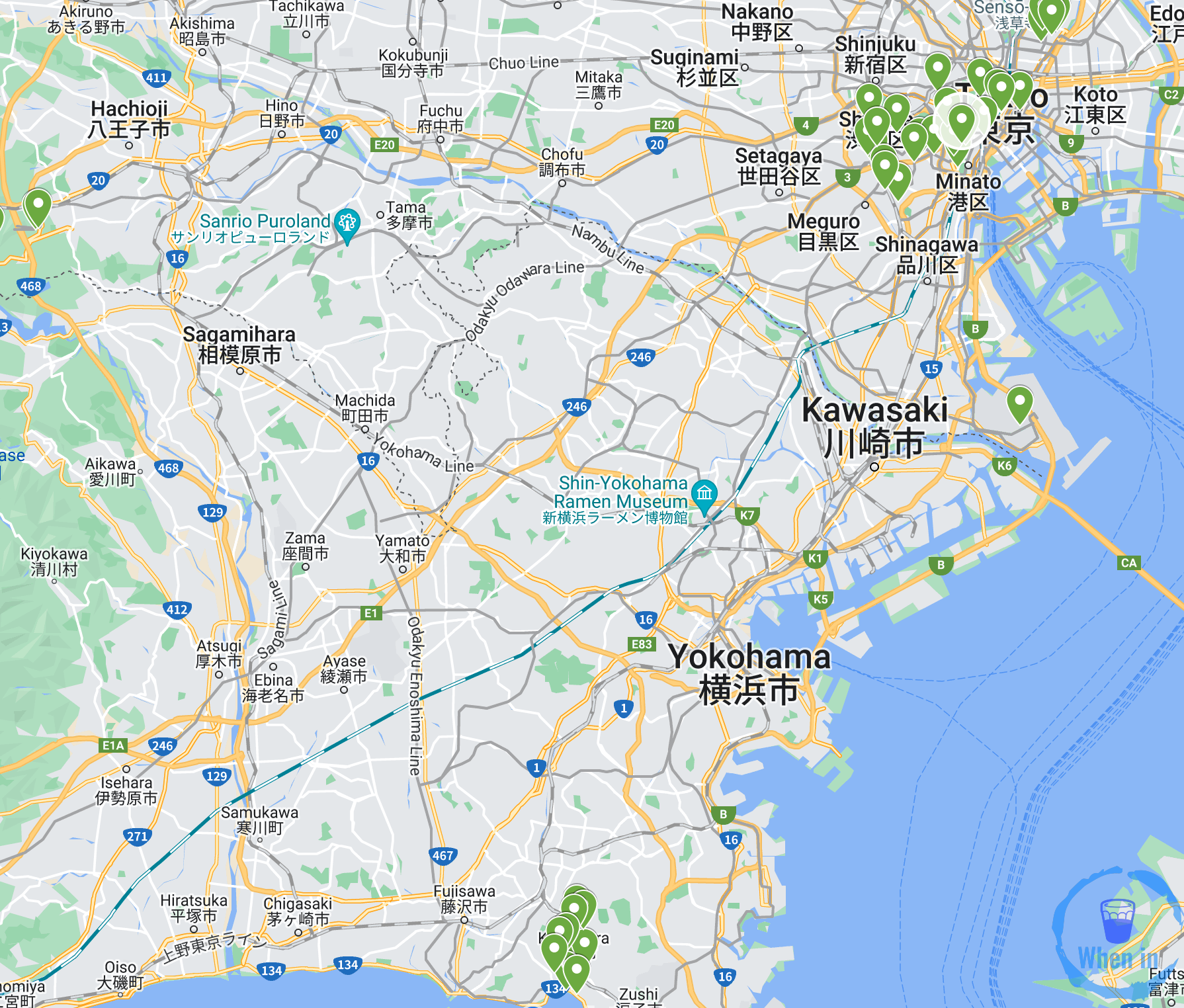
Travel and Location Map #
High Level Itinerary #
| Date | Location | Lodging | Dining | Activities |
|---|---|---|---|---|
| Sunday | Travel | N/A | N/A | Departed SEA–>HND |
| Monday | Tokyo | Hotel Toranomon Hills | Heiwa Doburoku Kabutocho Brewery, Hitochino Brewing Tokyo Yaesu, Sumibi Yakiniku Nakahara | Visit Tokyo Station |
| Tuesday | Tokyo | Hotel Toranomon Hills | Konbini, Kubota Sake Bar, Yakitori Imai | Imperial Gardens, Meiji Jingu, Shibuya Sky, T Market |
| Wednesday | Tokyo | Hotel Toranomon Hills | Konbini, Zaimoku, Aratama Katsutei Souhonten, Ant’nBee, Sushi Yuu | Kamakura Day Trip and Temples |
| Thursday | Tokyo | Hotel Toranomon Hills | Konbini, Takahashiya, Tofuya Ukai | Mount Takao Day Trip |
| Friday | Tokyo | Hotel Toranomon Hills | Konbini, Hitochino, Ramen Street, Bake, Tacos Bar, Buri Bar | Sensō-ji, Mokuhankan, Dengama, Ramen Street, Yebisu Brewery and Museum |
| Saturday | Tokyo | Hotel Toranomon Hills | Konbini, Henry’s Burger, Arbol Seiro, Eureka! Sake Bar, Sumijaki Unafuji Yurakucho | TeamLab Borderless, Hie Shrine, Tokyo Tower |
| Sunday | Travel | N/A | Yamaharu | Depart HND–>SEA |
Detailed Itinerary #
-
Departing Flights - Overnight
Flight
This was our flight path to Japan:
- Delta from Seattle to Haneda leaving at 11:34 am arriving the next day at 2:15 pm
In the past (as you’ll see if I get around to writing it) most of the flights from the US flew into Narita. While a great airport, Narita was quite some ways from Tokyo (an hour plus even if you were going to one of the stations with a mostly direct train). In 2020, Delta, and a number of other airlines, started flying their US flights into Haneda. This was a fantastic development as Haneda (or Tokyo International Airport) is just south of Tokyo with multiple convenient train options to get where you need to go. Japan made some changes over the past few years to simplify entry though I still recall there being a poorly explained part of the process where we both had to scan in through a machine before we could get in a line to go through customs.
-
Tokyo for a Day and a Half
Stop
Normally, I would almost always prefer the trains in Tokyo over car transportation due to how fantastic the transportation system is in Japan. However, when arriving with luggage, I usually let the simplicity of getting a taxi to my hotel win over. It helps that taking a cab from the hotel we were staying at, the Hotel Toranomon Hills was about half the time that taking the two trains would have been. We would have stayed at the Andaz again but when we booked, they were out of awards availability. These two hotels are actually quite close to one another. Only separated by a couple of blocks, however, there is also a bridge that connects them via another building (that you don’t actually enter, just walk through an open portion of it). As it was, the Hotel Toranomon Hills was great. Plenty of konbini in the area and easy access from under the hotel to both the Hibiya and Ginza subway lines. Additionally, under the hotel was a cool city market named, T Market with both restaurants and shops that we went to a few times during our stay.
Places we ate during this part of our stay:
- Konbini - Breakfast
- When in Japan, we rarely eat breakfast from anywhere other than a konbini (convenience store). If you’ve never been to Japan and you’re picturing a 7-11 in the US, you’re way off. Konbini in Japan are an institution. Plus the food can be quite amazing both in terms of taste and variety. Our go to is usually a mix of onigiri (rice balls), sandos (egg salad, katsu, etc.), sushi, soy eggs, and more. Canned coffee or bottled green tea to drink really are a great start to the day. When we can both get our fill for what equates to $8, it’s hard to beat this deal. Unless I say otherwise, assume every other portion of the trip was filled with konbini breakfast.
- Heiwa Doburoku Kabutocho Brewery - Snacks, Sake, Beer, and Doburoku
- I discovered this cute little sake bar prior to the trip I took back in 2022 (I think). Located in Nihonbashi, this is a VERY short walk from the Hibiya Line’s Kayabachō Station and a slightly longer walk from the Ginza Line’s Nihombashi Station or a 15 minute walk from Tokyo Station this place is accessible right from the ground floor so it’s hard to miss. They offer a delightful selection of their own sakes as well as doburoku (an ancient alcoholic drink that is illegal for home brewing in Japan and looks like nigori sake but thicker), as well as snacks. I think this is where Sam and I realized how delicious soy marinated quail eggs were (we probably had three orders that day). The service is very friendly and everything is ordered via your phone (with a friendly English menu). Definitely worth checking out.
- Hitochino Brewing Tokyo Yaesu - Beer and Food
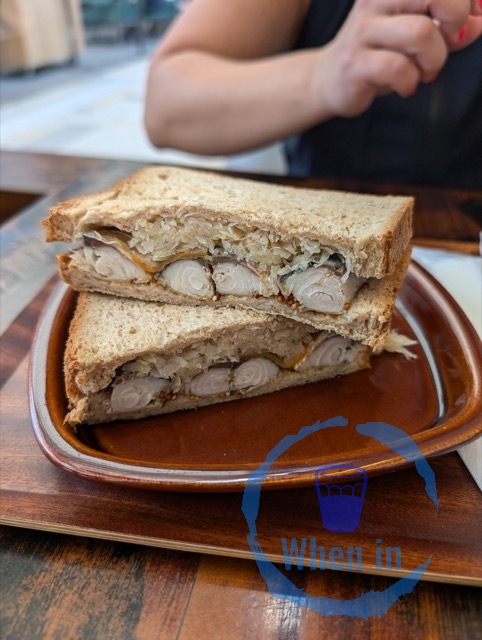
- As of writing, I believe there are SIX Hitochino bars in the Tokyo area and this was the fourth one I’ve been to (after Akihabara, Shinagawa, and the other one in / around Tokyo Station). I am a big fan of Hitochino’s beer, especially the Red Rice Ale. You can occasionally find their stuff in the US but you’ll never (at least I haven’t) find a selection like they have at one of their bars in Japan. Unfortunately, they don’t always have the Red Rice Ale on draft so I was quite happy they did at this output. The location, like many other things in Japan, can be hard to explain. If you were outside the east side of Tokyo Station looking at the doors, you’d want to look for a stair case to a second floor area on the outside of the station. On the second floor there is a open air pathway with restaurants and Hitochino on it. Another way of finding it is if you go to the Daimaru Tokyo department store (which you should really check out) and you make your way to the second floor, you’d aim to go out the south side doors and you’d walk right to Hitochino. Note that there is a second Hitochino kind of on the opposite side of Tokyo Station on the first floor of Gransta Tokyo (an area with a bunch of shops and restaurants that is connected to the station). So if you ask for directions, you might have to be specific. I’ve already mentioned the Red Rice Ale (though you can’t go wrong with any of their beers, they also have sake) but if you’re looking for a bite, we both really enjoy the mackerel sandwich.
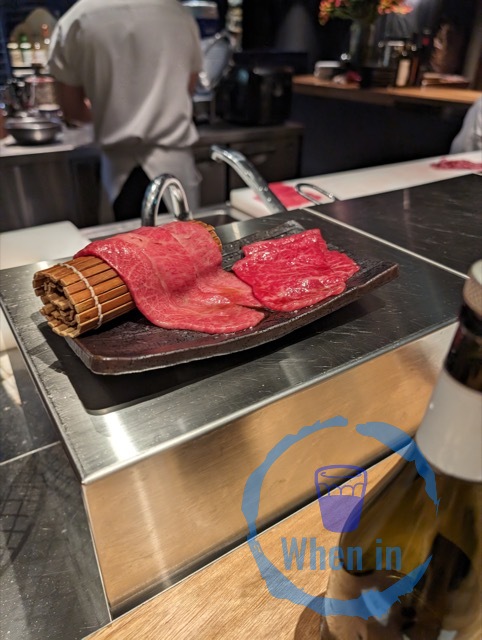
- Sumibi Yakiniku Nakahara - Amazing Japanese Beef including Tongue
- This was our second time at Sumibi Yakiniku Nakahara and I can easily say that it’s one of my favorite restaurants in Japan, maybe anywhere. At some point I’ll split this out into a separate page so I can go into more detail but this place is stellar and does a lot of things really right: the food, the service, the ambience, and the drinks. On the food, you’ll be served a variety of cuts of meat cooked right in front of you over the charcoal grill where you’re seated (we at at the counter where the chefs work right in front of you but the side tables have grills in the center as well). There’s quite a variety of delicious and meticulously selected Japanese beef. The highlight though is the beef tongues and the filet cutlet sandwich. Really, everything is melt in your mouth delicious. They even manage to include some vegetables with a salad, a soup, and some vegetable sides. If you look in the back, you might even see the pots they have heating the charcoal in the back before it’s used in the grills. While there’s a number of people working there, the whole show is run by Chef Kentaro “Henry” Nakahara. Chef Henry actually recognized us from our visit earlier in the year and chatted with us for a while. Just like on the first visit, he was entertaining and quite funny. All in all, this is a fantastic restaurant and a wonderful example of yakiniku. I’ve already sent several friends to this restaurant and will return again. It’s worth noting that Chef Henry also operates a chain of hamburger places named Henry’s Burger that I checked out later in the trip. As you might imagine, the burger places are a little more casual. I highly recommend checking out both! Read more about and see more pictures at my post on Sumibi Yakiniku Nakahara.
- Kubota Sake Bar - Sake
- While in London, we went to a place called The Sake Collective that was somehow affiliated with a Kubota Sake Bar in Tokyo. Usually when I see things like this, I add them to a list to check out the next time I’m going to be somewhere. So that’s just what we did. This sake bar and store is located in the first basement floor of a building. Sam and I each had different flights of sake here. Both great selection and service. Note that they also seem to have food / snacks but we didn’t try any.
- Yakitori Imai - Yakitori
- I can’t recall exactly where I first read about Yakitori Imai but it was on my list of possibilities for the trip we took back in 2023 though we didn’t make it. On this trip, we made our way over to Gaienmae and enjoyed their Chef’s Choice Course with a selection of chicken, duck , pigeon, vegetables, and thankfully, more quail eggs. Not my favorite yakitori place in Japan so far (that honor belongs to a place in Kyoto) but a really great meal.
Activities, sites, and visits during this part of our stay:
- Tokyo Station
- We weren’t quite the tourists at Tokyo Station we’ve been in the past. That said we did go through on this trip and I’ll make a few more specific call outs later on. If you visit Tokyo, you’re almost certainly going to go through here if for no other reason than to get from one train to another. That said, if you’re reading this post and trying to plan your first trip to Japan, walking through Tokyo Station and trying to take it all in is worth the time and thought. There are floors of shops, restaurants, food halls, and more. It even connects to the Daimaru department store for even more stuff.
- Imperial Palace East Gardens
- Located in what feels like central Tokyo (but really isn’t if you look at a map), this whole area are the grounds of the previous Edo Castle and now the Imperial Palace where Japan’s Emperor lives. You can still see and walk up the remains of part of the castle’s tower but mostly this is a giant park you can walk around with abundant gardens, flowers, and several very old buildings. Note that you can’t actually go see the Imperial Palace itself without reservations which book out quite in advance.
- Meiji Jingu
- This is probably my favorite shrine in Tokyo, and there are quite a few. Meiji shrine was built to commemorate Emperor Meiji and Empress Shoken. If you’ve heard of the Meiji Restoration, this was the guy. The shrine itself is roughly in the center of a giant park in the midst of Tokyo. If you’re used to most major cities in the US, you might find it shocking that such a large park exists with so much urban development right outside it. In addition to the very impressive shrine itself, there are a number of very majestic torii gates on the grounds that you’ll walk past. Note that there is an etiquette to going through a torii. As you pass through a torii, stop and bow towards the inside (so towards the shrine in this case). You can then walk through. This is considered proper etiquette when entering sacred ground. Also, don’t walk through the middle of a torii as this is reserved as a path for the gods. Or if you don’t want to do any of that, just walk around the gate. This temple, like all in Japan, can get quite busy with people. If you go early, you’ll avoid the crowds.
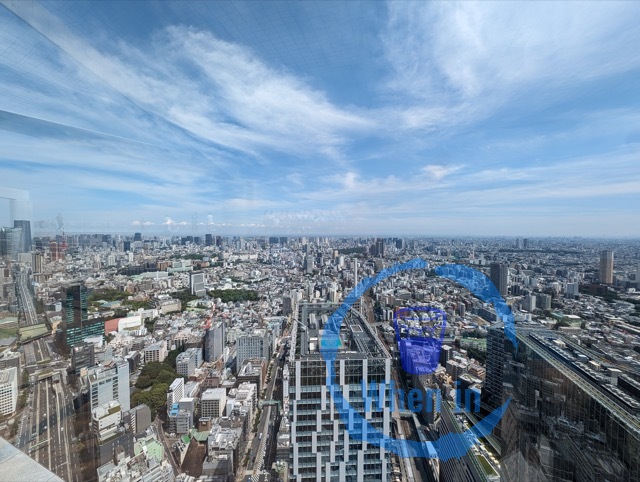
- Shibuya Sky
- Shibuya Sky is one of several places around the city you can go for a pretty amazing view of the surrounding city. This location gives you, not just a great view of the city, but also a view of the famous Shibuya Scramble Crossing. Tokyo is an amazingly huge city and it’s hard to appreciate just how massive it is without taking in the view from the top of a building like this or the Sky Tree. Reservations in advance are recommended as they may sell out access. One interesting note is that on top of locking any bags up in a locker, they made to check out (free of course) a lanyard for my DSLR to ensure it didn’t fall. Inside of the Shibuya Sky building there are assorted shops and restaurants and the nearby Shibuya Stream also has an assortment of restaurants and shops. We had some time to kill before our reservation at Shibuya Sky so we popped into an izakaya in Shibuya Stream for a drink while we waited.
- T Market
- One of the many amazing things about Tokyo is how many things can be hiding in any one building. From the outside it might just look like a skyscraper but on the inside there might be shops, restaurants, office space, hotels, grocery stores, transit access, entertainment options, and more. The building which houses the Hotel Toranomon Hills is no different. Located two floors down from the lobby level, is T Market. Home to an assortment of shops and restaurants, we visited T Market a few times while in Tokyo. I’ll highlight a few of the restaurants below but it’s definitely worth a walk through if you’re staying in the area. Note that the building next to the Andaz (not the one between the Andaz tower and the Hotel Toranomon Hills tower) contains something similar with the Toranomon Yokocho.
- Konbini - Breakfast
-
Kamakura and Tokyo
Day Trip
There are quite a few places that you can easily take day trips from Tokyo to. Included in that list is Kamakura, one of the cities that was previously Japan’s capital (along with Kyoto and Nara). Kamakura actually has quite a few temples and can almost have more of a Kyoto feel to it than Tokyo as a result. Located around an hour and 10 minutes by train. With a couple different train options to get us there, we took the Ginza Subway line to Shimbashi station where we then took the Yokosuka line to Kita-Kamakura Station. One of the reasons I wanted to take the Yokosuka Line was that it features Green Cars. Green cars are basically a fancier car. Green cars are on some of the JR longer distance lines but the place most people will see them are on the shinkansens. While the value of a green car on the shinkansen is probably up for debate, on the more local JR lines, it means a more comfortable seat with a table. In theory, since they account for how many green car tickets they sell, you should be guaranteed a seat as well. What’s more, if you have the right phone, you can actually buy your green car seat from your phone. Sam has an iPhone which is the right phone while I have an Android which means I had to use a ticket vending machine. Both were pretty easy (though I actually had to do some translation to get through the Mobile Suica app on the iphone). Instructions for both are here. The bulk of our trip to Kamakura was temples, temples, and more temples. We also enjoyed a nice walk by the beach and a delicious lunch. All before we headed back to Tokyo on the same route and off to Roppongi for dinner. Note that we got off at the Kita-Kamakura Station to start our temple walk (described below) but there is a Kamakura station closer to the main part of town. Kita means north so you Kita Kamakura is the North Kamakura Station.
Places we ate during this part of our stay:
- Zaimoku
- After quite a few hours of walking and temples, this was a nice little respite where we could enjoy a drink and a snack while looking out on Kamakura’s Zaimokuza Beach. We hadn’t found this place ahead of time but just wandered by it.
- Aratama Katsutei Souhonten - Tonkatsu
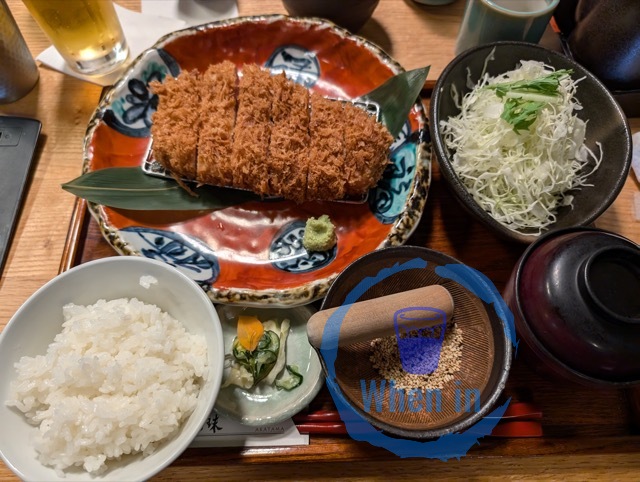
- I can’t remember how I found out about this place but saw it was recommended in a number of places. After working up an appetite walking around all morning, we were ready for a more filling lunch. This place delivered. Specializing in tonkatsu, or pork cutlets, a lunch set here usually consists of some deep fried protein, along with rice, cabbage, vegetables, and of course, miso soup. Between the fried pork (for me) and seafood (Sam) and the special sauce they have that you mix with sesame seeds you ground yourself, this was a hunger quenching and delicious meal. I can’t say I’ve been to many places where tonkatsu is the specialty (as opposed to places that just have it) but I can imagine this place would stand pretty well against any others. Definitely recommended if you find yourself in Kamakura.
- Ant’n’Bee - Beer and Snacks
- I found Ant’n’Bee on my first trip to Japan back in 2016. If I recall correctly, I was having a beer at the Roppongi Brewdog and while chatting with one of the bartenders, I was asking if there were any local places he recommended and he told me to go to Ant’n’Bee. Located just steps from the Roppongi Subway station, Ant’n’Bee is a basement bar. At the ground floor it looks like any other building that has different businesses on each level. Taking the stair case down one floor to the bottom takes you to the beer bar. The beer selection is diverse and delicious and the staff is friendly. Note that, like many places in Japan, they do allow smoking and as it’s in the basement if people are smoking it can be a bit much for some.
- Sushi Yuu - Sushi, Omakase
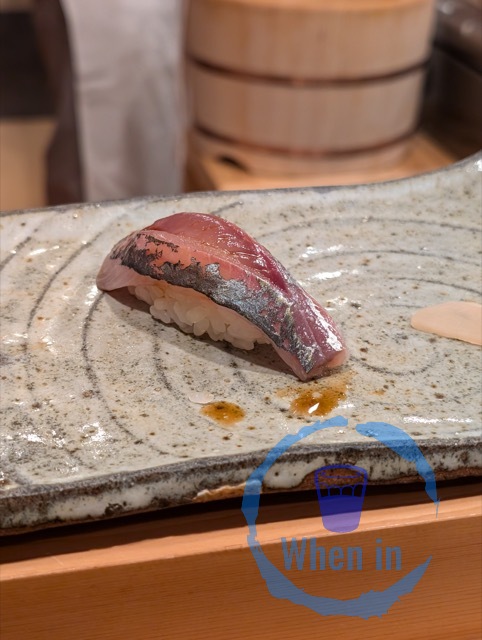
- Years ago, I started going to a Sushi place in Marunouchi (near Tokyo Station) after reading about it in Eater. The first time I went, it was fantastic. I actually went back for dinner two nights later. The next trip, I went back. The next trip, I took friends. However, when I went in 2022, it just didn’t seem as good. Thinking maybe it was a one off, I went back with Sam when we sent in 2023. Sadly, I don’t think it was a fluke but they lost the magic they had. That’s lead me to start trying out other sushi places when I visit Japan. Sushi Yuu was the first place I thought I’d try since moving on. Specifically, I was looking for a place with a great omakase that wasn’t going to be impossible to get into nor was it going to cost high-quality Seattle omakase prices. I can easily say that on the first two accounts, this place hit the mark and did a great job. Chef Daisuke put out a stunningly delicious and gorgeously plated set of bites. As to the price, it wasn’t terrible but for the two of us for omakase and sake it came out to be closer to ¥60,000 or close to $380. Again, not terrible, but close to double what the place I used to go to was. With the yen where it’s been, maybe this is to be expected. At any rate, I would definitely visit Sushi Yuu again, though I’m not yet ready to say I’d go back on every trip.
Activities, sites, and visits during this part of our stay:
- The Temple Walk (map)
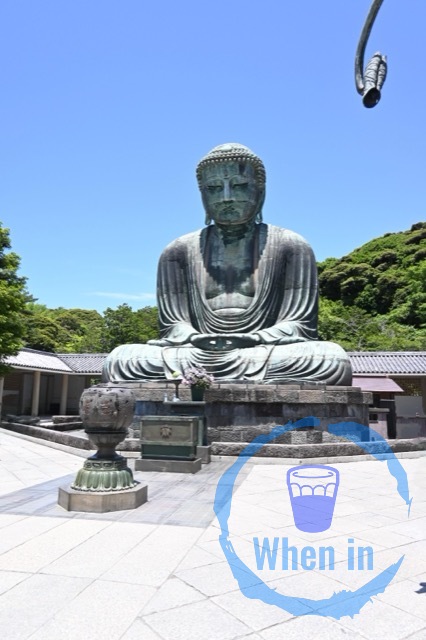
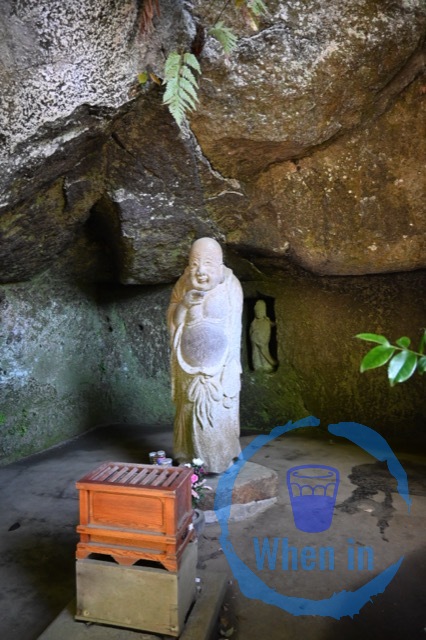
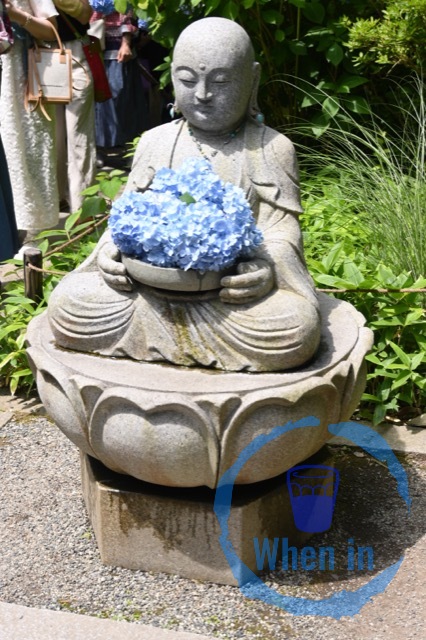
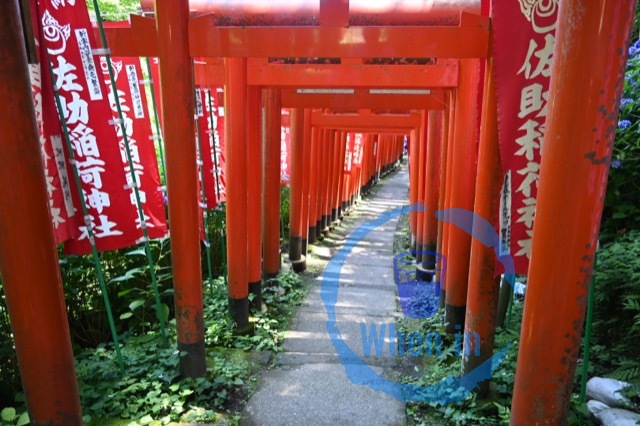
- As mentioned above, the big activity for the day in Kamakura was seeing the temples. Most folks that have heard of Kamakura know of it because there is a giant Buddha there. That’s true, but there are quite a few temples worth seeing when you visit. We sadly didn’t make it to all of the ones on our list (it was a pretty hot and humid day). Getting off at Kita Kamakura Station, we took a short walk to Engaku-ji. This is a really impressive Zen Buddhist temple and really sets the mood for the day. From there it was a short walk to Meigetsu-in, a Rinzai Zen temple. Also known as the Hydrangea Temple we just happened to be visiting in peak hydrangea season. That meant this temple was PACKED. While it was quite beautiful, this place more than any on this trip showcased the massive amount of tourism Japan is getting. On next was Jōchi-ji, another Buddhist Zen temple. From here, we headed to Zeniarai Benten Shrine, a Shinto shrine. If you follow Google Maps’ directions, you walk back towards the station and then onwards. However, from the front gate of Jōchi-ji, you can continue on (left of the gate / temple) and follow a hiking path through the forest (there’s a bit of incline here but nothing serious or long) to get to the Zeniarai Benten Shrine. From there, it’s on to the Sasuke Inari Shrine with it’s many red torii (I’d say these ones were more red than vermilion) and even more Inari fox ceramic statues. From here, you’ll actually walk through more of a developed town area until you get to Kotoku-in. This is home to Kamakura Daibutsu, the Great Buddha of Kamakura. If anyone visits Kamakura and posts one picture, it’s probably a picture of this Buddha. This Buddha dates to 1252, is 43.8 feet tall, and weighs 103 tons. And it’s been outside the whole time. Pretty wild the general shape it’s in considering. We had a number of other temples on our list (as you can see from the map linked above) but were just too exhausted. I’ve heard good things about visiting Hasedera which isn’t a far walk from Kotoku-In, but we didn’t make it.
- Zaimokuza Beach
- Being as it was hot and sunny, we couldn’t not enjoy a stroll down the beach. Interestingly, it seemed like they were still putting a lot of things together for the busy season. It must get much busier in July and August.
- Zaimoku
-
Mount Takao and Tokyo
Day Trip
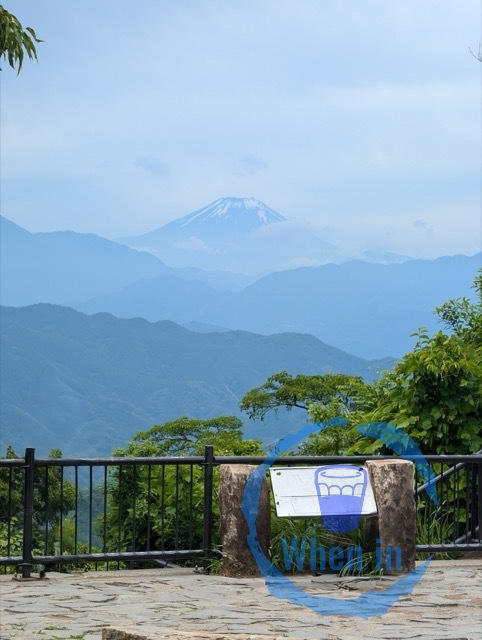
Another day, another day trip. This time around, we headed west to Mount Takao (Takaosan). Visiting Mount Takao affords one the opportunity to be out in nature, walk (also hike), see several very cool temple structures, visit a beer garden (if it’s the right time of year, and sadly it wasn’t for us), and if you’re lucky, see Mount Fuji (Fujisan) in the distance. If you start from Shinjuku Station,
Places we ate during this part of our stay:
- Takahashiya - Soba
- In looking up places to eat in the Mount Takao area, this restaurant came up as being famous for their soba with grated yams. We thought that some soba might be nice on the trip so we’d try it. Funny enough, neither of us got their specialty. Sam enjoyed the kamonegi soba (duck) and I had a tempura soba. Both delicious. I also was able to try a buckwheat beer that was brewed in Ashland, Oregon, a town we stopped in on our road trip earlier in the year. All in all, a great meal after a long walk down the mountain. Cash only!
- Tofuya Ukai - Tofu
- I first visited this restaurant on my first trip to Japan. They specialize in tofu and do a wonderful tasting menu, not just with tofu. The restaurant is in the shadow of Tokyo Tower and has a picturesque Japanese garden as you enter and then a wonderful courtyard in the center, with a glass hut in the middle where they make their tofu. This is one of the most picturesque restaurants I’ve been to in Tokyo. Between the wonderful service, delicious food, and locale, this is a great place. Note that while I think most if not all of their course menus don’t seem to be vegetarian or vegan, which you might think given the focus being tofu, my understanding is they can easily accommodate. I’ve only had a private room once but if it’s a special occasion, I highly recommend reaching out to see if you can get one. It’s a whole different experience compared to when I’ve been in a larger room. After your meal, make sure you walk through the courtyard in the center of the restaurant.
Activities, sites, and visits during this part of our stay:
- Mount Takao
- On your way to Takaosanguchi Station, you will likely need to get off the Keiō Line at Kitano Station to cross the platform onto the Takao Line to continue the last 15 or so minutes. You’ll do the same when you return. From Takaosanguchi Station, the easiest way to head up is to walk to Takaosan Station and take the Takaotozan Cable Car partially up the mountain. You can also take a ski lift (probably weather and time of year dependent) or walk (we walked down it, I wouldn’t recommend walking up it). There are numerous trails up and around Mount Takao. After the cable car, the easiest and most straightforward route should be the Red route. This will get you to see quite a bit on you way up including the Octopus Cedar and Yakuo-in Temple. Once you’ve reached the top, you should find the Takao Visitor Center along with plenty of views. Make sure you find your way to Mt Takao Omiharashidai for what should, hopefully, be a great view of Mount Fuji (albeit quite far away). When we went back down, we took the Blue route which took us past the suspension bridge and a bit more through nature than the way up. Folks also seem to like the Green trail that takes them by Biwa Waterfall. Sadly it wasn’t the right time of year for it to be open (seems like we missed it by days) but the Observation Deck (right around where the cable car drops you off at the top) has the Takaosan Beer Mount beer garden which is supposed to be Japan’s highest beer garden. At the bottom of the mountain are a number of shops and restaurants as well. Given this is only about an hour outside of the city, this was a pretty fun half day trip. We started pretty early in the day before it got too hot. I could see this having been much hotter later in the day or pretty chilly in the winter months. Note that there seemed to be some special tickets one could purchase for the trains from Shinjuku to the mountain which included a discount on the cable car but we didn’t look into these enough to make use of them.
- Takahashiya - Soba
-
Tokyo for 2 (and a half) Days
Stop
Originally, we’d planned to use our last two full days for one more day trip. I looked at Yokohama, Enoshima, and Niiko. Ultimately, we were a bit tired and felt it would be better to stay local. We hit some of the old favorite sites and shops and did a few new things. On our first day we visited the Sensō-ji area for the temple complex and shopping before heading to Tokyo Station and then on to Ebisu for dinner. On the second day, we visited the newest TeamLab installation, visited a new shrine we had not been to before, and we went up Tokyo Tower for the first time. On the partial last day we walked to a temple right by the hotel, had some sushi, and headed off to the airport.
Places we ate during this part of our stay:
- Hitochino Brewing Tokyo Yaesu
- We were in Tokyo Station so we had to return for some more red rice ale!
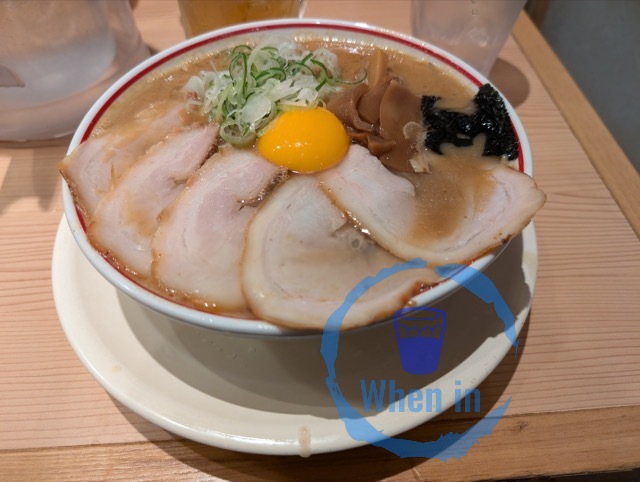
- Ramen street - Ramen
- Chances are reasonable that if you’re visiting Japan, you’ve had ramen before. As you could imagine, Ramen in Japan can be extremely delicious. It can also be amazingly cheap compared to the cost in the US. As mentioned before, Tokyo Station has loads of restaurants in it. Ramen street is located in part of Tokyo Station named First Avenue Tokyo Station. This area contains, you guessed it, restaurants and shops. It’s also a well known area as it has the very popular Character Street which sells popular merch from Japanese anime, manga, etc. To get to First Avenue Tokyo Station from Tokyo Station (hard to actually say because the station is so big) you’ll head to the Yaesu North Exit of Tokyo Station and take the stairs down. When in doubt, ask for directions. If you’re really having trouble but you found the Hitochino Brewing above (remember this is the one that is outside), then go in the Daimaru department store, go to the basement where the grocery and food market is, and then follow the signs for Tokyo Station / JR lines. You’ll have to go through First Avenue Toky Station. Once you’re there, Ramen Street is on the South Street (if you’re facing the entrance to Gransta Tokyo, go left, and if you’re facing the path to Gransta Yaesu and Daimaru, go right). Once there, you’ll have EIGHT options to choose from. They all function much the same way. There will be a line (maybe) to use the machine (some of them cash only) where you’ll pay then select what you want. You’ll get tickets for each item you order. Once you do that, you’ll then get in line (again maybe if it’s busy) to actually go in the restaurant. Some places the it’s just one line, others it’s separate. They’ll seat you from there, take your tickets and shortly bring your orders. This time around, we chose to eat at Tokyo Niboshi Ramen Gyoku. Not much more needs be said other than it was delicious.
- Bake Cheese Tart
- You might be aware of this but Japan is pretty good with food. Of all kinds. One area they excel at is definitely pastry. Imagine the most decadent or elegant patisserie in the world and if it’s not in Japan, there’s probably a better one in Japan. Bake Cheese Tart might not be the elegant patisserie of your dreams, but their cheese tarts are definitely the stuff of dreams. While in Tokyo Station, it’s worth going a bit out of your way to find this place. The Tokyo Station one is located in Gransta Marunouchi. I recommend finding the info booth in the station and asking where to go. The original cheese tart is to die for. They usually have different flavors as well. I think I’ve tried the matcha and the chocolate and they’re both also amazing, though the original is still my favorite. There are a few Bake shops around Tokyo, and a few more outside of Tokyo. There are also other shops across Japan that will make a similar dessert. Wherever you can find out, I suggest you try it out!
- Tacos Bar - Taco Omakase
- Another place where I can’t exactly remember where I heard about it but we tried to go here on our trip in 2023. Unfortunately, they weren’t serving dinner (or something along those lines) on the one night we had free for it. Thankfully, we were able to figure that out for this trip. Tacos Bar basically does an omakase menu of tacos. I think this was fun, playful, and tasty and made for beautiful looking tacos. I wouldn’t go out of my way to go again though.
- Buri - Standing Bar
- If there was one place that I’ve probably been to the most on my trips to Japan at this point (outside a few temples), it’s probably Buri. Buri is a standing bar just a couple blocks from the Ebisu JR and Subway stations. While they have food, I don’t think I’ve ever eaten there. What they also have is a wide selection of drinks including a huge variety of sake one cups. If you ask them to, the’ll turn it into a sake slushie as well. While you might not be a big fan of sake like me, it’s worth stopping by just to get one as they all come in very interesting glass cups which you can take home after you finish your drink. This is a laid back but super fun bar.
- Henry’s Burger - Burgers
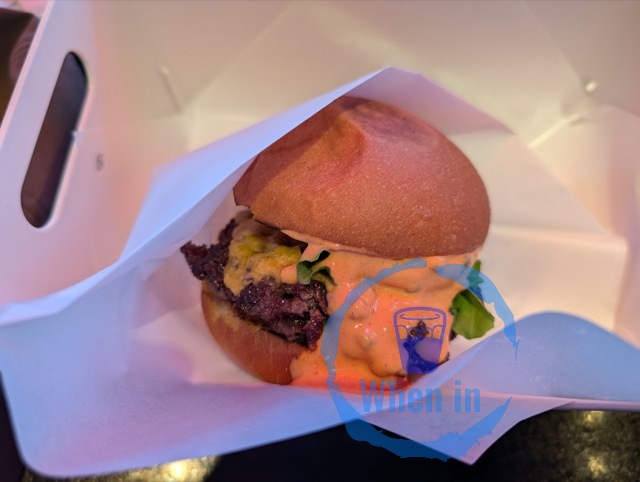
- The first time I met Chef Henry at his yakiniku restaurant, Sumibi Yakiniku Nakahara he handed me a card and told me about his burger place, Henry’s Burger. Sadly on that trip, I didn’t have time to make it to one of the several outputs of Henry’s Burger, but on this trip I had some time to kill while Sam was busy with other things. So I jumped on the subway to Harajuku and walked past all the major stores in the area to this small restaurant. The menu is pretty straightforward: A couple types of burgers in different sizes, fries, onion rings, side salad, and drinks. If you’re hungrier than I, you can also try Henry’s Monster burger which comes with 1 kg of Kuroge Wagyu. I stuck with the medium (double patty) burger, fries, and a drink. I’d put the quality of this burger as quite high. The meat tastes noticeably delicious and the ingredients blend together nicely. Being unable to get In-n-Out in Seattle, I still crave it, though oddly not enough to go out of my way when I’m somewhere there is an In-n-Out. I think Henry’s Burger was considerably better and I’d definitely consider going out of my way to go back again. Definitely recommend for a casual and delicious burger. Read more about and see more pictures on the dedicated post for Henry’s Burger.
- Arbol Siero - Chinese Dim Sum
- One of several places we checked out in T Market under the Hotel Toranomon Hills. Arbol focuses on dim sum and we had a nice variety of dumplings, noodles, and fried rice.
- Eureka! Sake Bar - Sake and Snacks
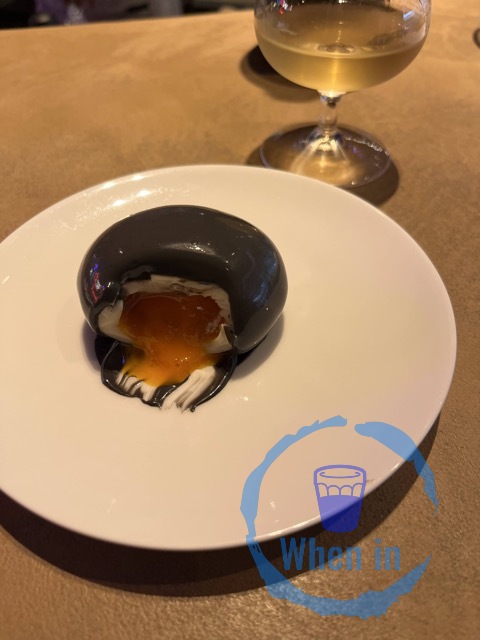
- This is a cute little sake bar on the second floor of a building in Rappongi. Their specialty is in pairing sake with the snacks they have to offer. When we first showed up we were just in the mood to drink sake but after seeing some of the dishes delivered to fellow patrons, we caved. The food was delicious as was the sake. The sake sommelier who was helping us out actually knew about the sake bar we frequent in Seattle, Hannyatou, which was pretty cool. I highly recommend their Ufu Mayo, a smoked egg with house-made special mayo sauce. Both the egg and sauce look black and are divine. The soft boil on the egg was perfect.
- Sumiyaki Unafuji - Unagi (eel)
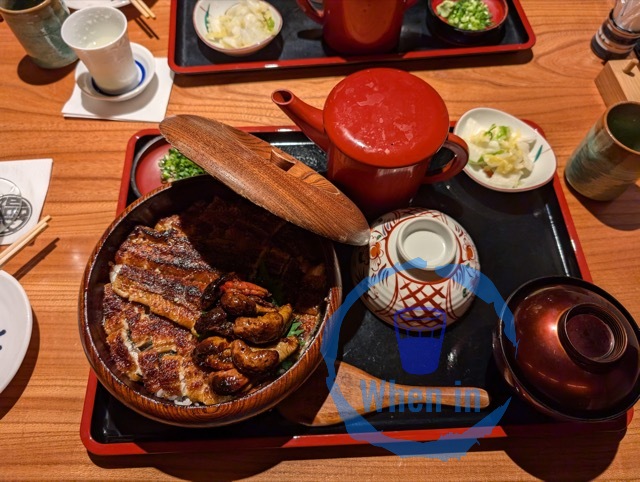
- One of the things that Sam and I really wanted to make sure we hit on this trip, after missing it the prior year, was a place that specialized in unagi. Located in really cool viaduct with trains running on top of it, this restaurant’s whole focus is eel. Sam and I both enjoyed dinner sets here where the eel was the star of the show. What we actually ordered is called hitsu-mabushi which is a traditional eel dish from Nagoya. The idea is that you take rice and eel and put that in a separate bowl and enjoy as is at first. You then add green onion and wasabi and enjoy. Then you pour in dashi stock and enjoy it ochazuke style. Finally, you eat the rest however you want. A really delicious last dinner for our trip.
- Yamaharu - Standing Sushi
- Actually called Tachigui Sushi Uogashi Yamaharu, this place is located in the back of T Market. We’d spotted this place earlier on our trip and decided to make the our last meal before we headed to the airport to head home. This is a standing sushi place which means you’re standing at the sushi bar while you eat. This is actually not uncommon in train stations. Sam and I actually ate at one in the Shinagawa station on our last trip. This place had a very convenient tablet in front of each diner that also had an English menu so ordering was super simple. They had sushi sets as well as the ability to order individual pieces and assorted small dishes (like firefly squid). Sam and I probably ordered too much but it was delicious and it was our last meal out in Japan.
Activities, sites, and visits during this part of our stay:
- Yebisu Brewery and Museum - Beer
- This could have been up in the list of eating and drinking places since we only got beer here but since they also do tours, I’m listing it in the activities. This is a really sleek facility where you can try out several Yebisu beers. We both tried the sampler which was quite fun as it included two less common Japanese beers: an IPA and a hojicha (roasted green tea) beer. Note that they also have food. When we were there we waited in a line to order from a kiosk then took the tickets from the kiosk into the continued line until we got to the bar where we handed tickets over and got our beer.
- TeamLab Borderless
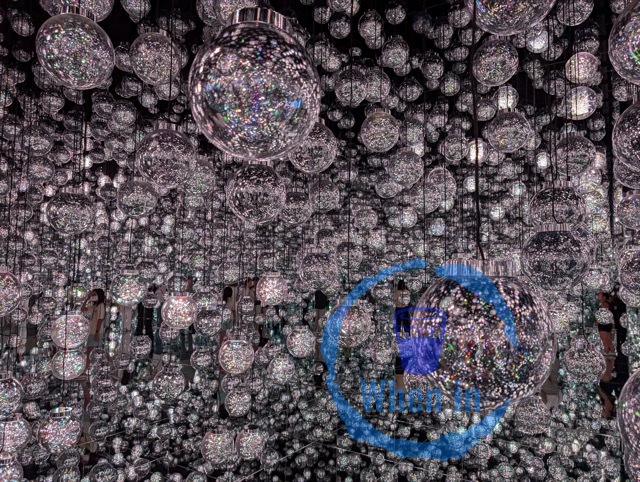
- If you’ve been to Tokyo, there’s a good chance you’ve heard of TeamLab. They have been doing interactive art installations in Japan for years. The two installations they’ve had in the recent years was Borderless and Planets. Borderless recently (Feb 2024) relocated to the new Azabudai Hills complex. Even without going to Borderless this is a pretty cool space to go visit. From the interesting architecture to the wide variety of shops and restaurants to the pristine outdoor space. It’s pretty. cool. But you might as well go to TeamLab Borderless while you’re at it. Borderless combines lights, colors, sounds, fog, and space to create a truly memorable experience. This takes some time (probably budget at least an hour) to walk around and is not so much a directed experience as one where you organically go from room to room with each being a different experience.
- Hie Shrine
- Despite being one of the major shrines in Tokyo, I had never visited Hie Shrine before. Initially what brought us here, aside from the proximity to the hotel, was that they were supposed to be doing some ceremony there that evening. Sadly, we missed the ceremony. However, the temple was quite cool and worth checking out if you’re not getting outside of Tokyo to a place with more temples like Kamakura or Tokyo.
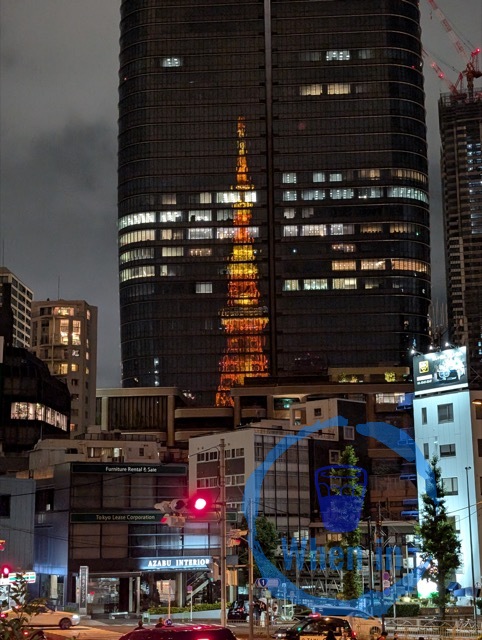
- Tokyo Tower
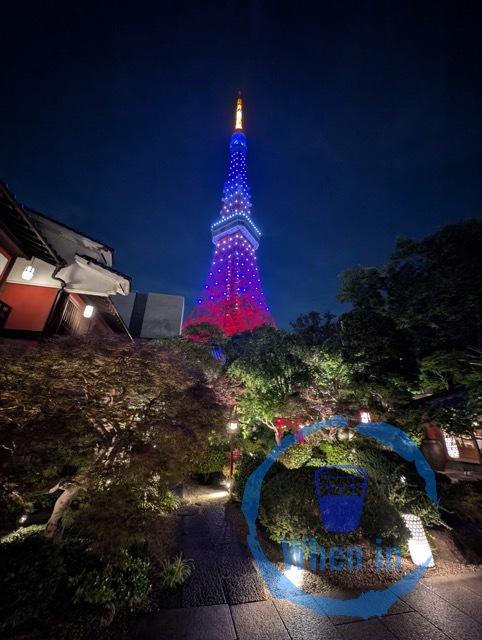
- Tokyo Tower is a well known landmark in Tokyo and honestly, probably the most well known item in the Tokyo skyline (my own personal opinion but it feels more iconic than the other very recognizable tall thing, Tokyo Sky Tree). The tower was started in 1957 and completed in 1958 and the design was based off the Eiffel Tower (the inspiration is quite clear when you see it). Today the tower houses shops, restaurants, museums, and two observation decks: the Main Deck and the Top Deck. Reservations, especially for the Top Deck, are highly recommended. This was a cool experience, but I wouldn’t do it again. While the tower itself is iconic, and the view is nothing to sneeze at, the view is better at the Sky Tree and the glass at the Tokyo Tower could really use with a cleaning. Additionally, the procedure to go to the Top Deck was very slow. They’ve turned it into an experience, which makes sense as they need to make sure they have enough room at the Top Deck before they bring people up to the small space, but it’s a bit dull until you get the actual view and then you’re elbow to elbow with the other people.
- Sensō-ji
- Sensō-ji is the oldest temple in Tokyo and, while originally built in 645, much of it has been rebuilt due to fire. According to many articles, this is also one of the most visited sacred sites in the world. Which is to say, this place can get busy. The earlier or later you go in the day, the more likely you will be able to enjoy the complex in peace and quiet. That said, the shopping street that leads from the Kaminari mon (gate) to the main hall, named Nakamise-dori, won’t have the shops open very early or very late in the day (I don’t think the shops being open makes it worth the crowds). The main hall, the gates, the pagoda, and the dozens of smaller shrines make this a must see in Tokyo. I usually make my way here on every trip just because it’s very beautiful. Not my favorite temple in all of Japan, but very cool. The surrounding neighborhood, Asakusa, is also quite fun to walk around.
- Mokuhankan
- Woodblock printing also known as ukiyo-e, is a artistic technique in use since the 700s. Many of the best known artworks from Japan are actually woodblocks. You may not know it’s name, but you’ve probably seen a picture of The Great Wave off Kanagawa by Katsushika Hokusai which is a woodblock print. We really like this style of art work and there is a shop in teh Asakusa neighborhood, just a couple blocks from Sensō-ji which specializes in woodblocks. They also deal with tax free purchases for foreigners and will handle shipping the artwork home for you. We bought prints from them this time and the prior time we were in Japan and had them framed at home. They look great on our walls. I haven’t bought from them online but they do have an online shop as well.
- Dengama - Pottery
- Located a short walk west from Sensō-ji is Kappabashi, more commonly known as Kitchen Street. If you were opening a restaurant and you needed to outfit it with kitchenware, flatware, place settings, aprons, cooking utensils, knives, plastic versions of your food for the window (very popular in Japan), you could come ot Kappabashi and get it all. Located on a corner in Kappabashi is my favorite pottery shop in Japan, Dengama. I’ve bought stuff at this shop for years now an am always happy with what I’ve gotten. My purchases have primarily been sake glasses and carafes (tokkuri), cups, bowls, platters, and chopstick rests. However, you’ll find a large variety of items here including tea pots, donabes (a Japanese cooking pot), and much more. Additionally, they have a large amount of things at very affordable (I might even say cheap) prices while the upstairs has more high end and costly items. Most, maybe all, of the pottery here is also made locally in Japan. I highly recommend bringing an extra bag or leaving space in your bag so you can bring pottery home with you (they also make great gifts)!
- Hitochino Brewing Tokyo Yaesu
-
Returning Flights - Same Day
Flight
This was our flight path back to Seattle:
- Delta from Haneda to Seattle leaving at 4:20 pm arriving at 9:55 am (same day)
Highlights #
For this trip, it’s easy to say the food was the highlight but that’s probably the highlight for EVERY trip to Japan. If I had to narrow it down to new things on this trip, it was probably the day trip to Mount Takao and Eureka! Sake Bar.
Lowlights #
The weather. It wasn’t as bad as our last trip in early September but it was still quite hot and humid. We need to remember that June through Early October are NOT our times to visit.